





Many English learners believe that mastering the 26 letters of the alphabet is the key to speaking English fluently. While learning the alphabet is an important first step, it doesn’t explain why so many English words are pronounced differently from the way they’re spelled. That’s where phonetics comes in.
What Is Phonetics?
Phonetics is the branch of linguistics that studies the sounds of human speech. Instead of focusing on written letters, phonetics helps us understand how sounds are produced, heard, and used in spoken language.
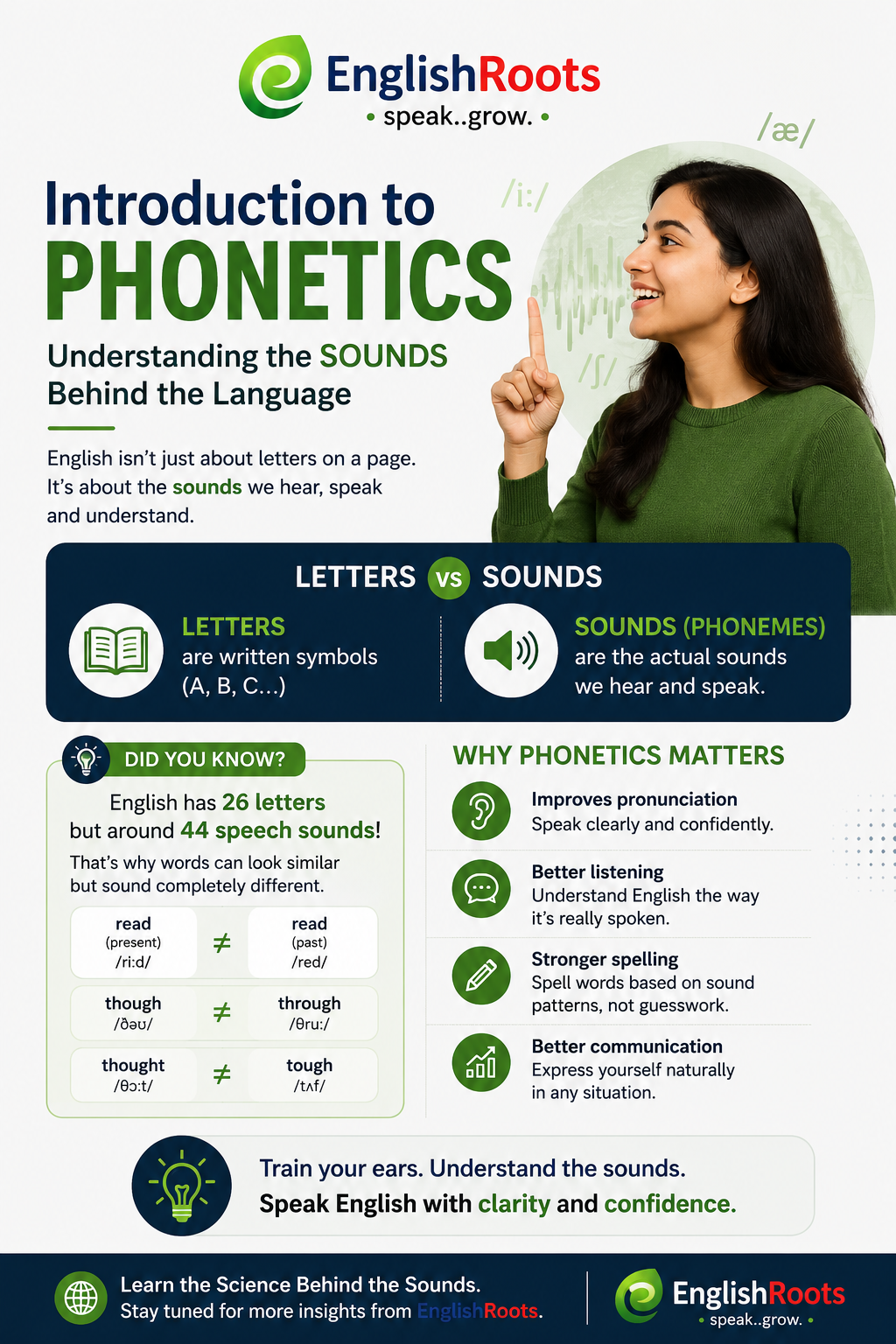
English pronunciation is based on speech sounds, also known as phonemes. These sounds form the building blocks of spoken English and are essential for clear communication.
Letters vs. Sounds: What’s the Difference?
One of the biggest misconceptions among English learners is assuming that letters and sounds are the same. They are not.
Letters
Letters are the written symbols we use to represent language, such as A, B, C, and so on. English has 26 letters in its alphabet.
Sounds (Phonemes)
Sounds, or phonemes, are the individual speech sounds we produce when speaking. English has approximately 44 phonemes, which is why pronunciation often seems inconsistent.
For example:
- read (present tense) sounds like need
- read (past tense) sounds like red
- Words such as though, through, thought, and tough all contain “ough”, yet each is pronounced differently.
These examples demonstrate that English pronunciation depends on sounds, not just spelling.
Why Understanding Phonetics Matters
Learning phonetics can dramatically improve your English skills by helping you:
- Speak with clearer pronunciation.
- Improve listening and comprehension.
- Develop more accurate spelling.
- Build confidence in everyday conversations.
- Reduce reliance on memorizing word pronunciations individually.
Rather than guessing how a word should sound, you’ll begin to recognize pronunciation patterns and speak more naturally.
What Is the International Phonetic Alphabet (IPA)?
The International Phonetic Alphabet (IPA) is a globally recognized system that uses symbols to represent speech sounds. Many dictionaries include IPA transcriptions to show the correct pronunciation of words, regardless of their spelling.
Learning the IPA isn’t mandatory for beginners, but becoming familiar with common symbols can significantly improve your pronunciation and listening skills.
Final Thoughts
If you want to speak English with confidence, don’t stop at learning the alphabet. Start training your ears to recognize the sounds of English. Once you understand the relationship between letters and phonemes, pronunciation becomes more logical, and speaking becomes much more natural.
Learn More
Explore these trusted resources to deepen your understanding of phonetics and English pronunciation:
- Cambridge Dictionary – Pronunciation Guide
https://dictionary.cambridge.org/pronunciation/ - International Phonetic Association – Phonetics Resources
https://www.internationalphoneticassociation.org/content/links-phonetics-resources - Cambridge University Press – Introduction to the International Phonetic Alphabet (IPA)
https://www.cambridge.org/core/books/handbook-of-the-international-phonetic-association/ - englishroots.in
- Spoken English Classes for Students in Bangalore – Student Roots
- Career Roots Archives – English Roots

0 Comments